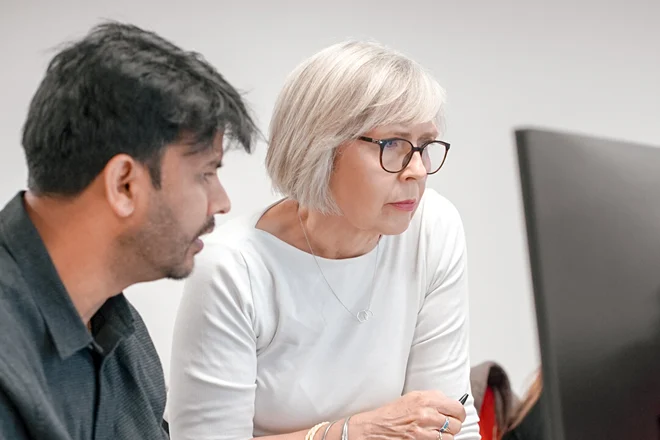
This year, Comm-Tech turns 40. We’ve marked the milestone with a new look and a brand-new website, and it felt like the right moment to look back at where it all started. So, we sat down with our Managing Director, Justin Millar, to hear the story in his words. He came well prepared, having spent two days going through old family photographs, staying up until midnight.
In 1986, a mobile phone did one thing: make calls. There were two tariffs on the market, no texting and no data, and the handsets were the kind Justin still calls “Del Boy phones”. That year, his father, David, decided to get into this new game.
From granite and petrol to mobile phones
Mobile phones weren’t the family’s first business, as they had run a granite quarry in the Midlands until it couldn’t go any deeper or any wider. They then moved into petrol stations, running about eight under Martham Service Station Limited.
In 1986, a friend from the Midlands rang David and suggested he get into mobile phones. Both father and son described themselves as excitable, and David didn’t need much persuading. He opened an account with Nokia Mobira and became one of its first partners.
Comm-Tech began as a trading name of the petrol station business, working from the office where the takings were counted. The desks were too big for the room, so one was cut down to squeeze it in. That became the Comm-Tech desk.
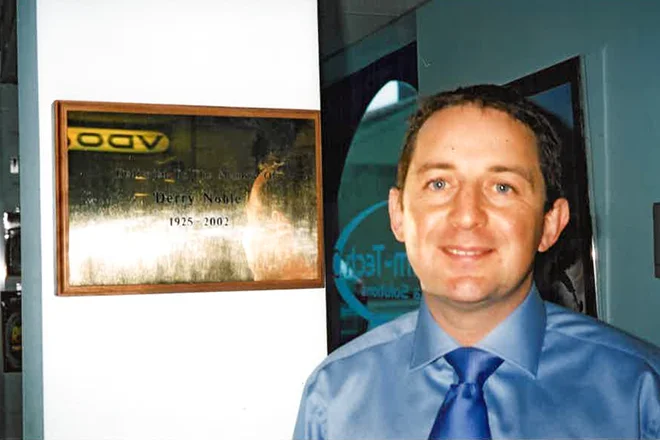
Justin’s grandfather, Derry, helped get Comm-Tech off the ground by putting money into the business in those early days. This is something Justin continues to remember fondly.
The first sale
Selling a phone in 1986 meant driving about an hour and a half to Nokia’s UK office in Godmanchester to borrow a handset. David took a Mobira Cityman 900 to Ian McCready at Screen Print Plus in Great Yarmouth. Ian sat back, asked a few questions and said he’d like a car kit too. He then asked what two would cost.
David said £2,500. Ian agreed so quickly that David’s first thought was he’d priced it too low. It was a good first sale, and Ian was well ahead of his time in seeing what mobile phones could do for his business. He stayed a customer for more than 20 years. As Justin puts it, “that was the start of our game.”
Justin joins
Justin arrived in 1989, after two years of selling photocopiers door to door for Copyfax in Great Yarmouth. It was hard-closing sales, complete with long silences you weren’t allowed to break. “It was not in my DNA,” he says.
When David’s sales manager retired, he offered Justin a salesperson role with a path to sales manager. The team was David, Justin, one other salesperson and the family boxer dog, who, Justin admits, ranked above him. There were no computers, and invoices went on carbon copy pads. Everything else lived in ledgers and diaries.
Shipping, haulage and a £19,000 test set
The early business was built on two markets: shipping and haulage.
Ships came into Great Yarmouth during the busy years of North Sea oil, and Comm-Tech worked with the shipping chandlers who supplied them. Justin climbed ships’ chimneys in a harness to fit marine antennas, coming back down covered in soot. On the analogue network, a directional antenna could reach about 80 miles, so crews near Holland could still call home. Now and then a ship came in with its windows blown out by a rogue wave and needed a new phone and antenna. “It was great business,” Justin says, as Comm-Tech went on to win the contract to manage all Maersk ships coming into UK waters.
Haulage firms needed phones in their lorries to coordinate loads and arrival times, and the vehicles were only free on Saturdays. Justin would be fitting car kits from 6am, watching the clock because he had rugby that afternoon. He played scrum half and was usually still pulling his boots on as the whistle went.
What made those contracts possible was a decision David took in 1987. He spent £19,000 on a Marconi test set so the business could become a service centre. Nokia paid £35 per warranty repair, and at first there was only about one phone a week to fix. Justin called it “the stupidest investment that my dad decided to do, but actually it was the best one.” Comm-Tech became one of Nokia’s largest service centres and also the first Philips service centre in the UK. Being able to keep customers’ phones running is what won the shipping and haulage work. “His foresight, not my foresight,” Justin says.
By the mid-1990s, Comm-Tech was winning haulage business after haulage business which, Justin says, was when they knew they’d done the right thing. The engineering team grew to about 20 people.
Keeping up with change
The phones changed fast. Around 1992, the Nokia 101 brought a handset small enough for a pocket, and SMS arrived at the same time. Then later, the Nokia 6110 introduced car kits that worked with the models that followed, so upgrading your phone no longer required a new installation. Farmers fitted them in combine harvesters, tractors and Range Rovers.
Meanwhile the petrol stations couldn’t compete once supermarkets opened their own forecourts. In 2002, the family closed the petrol station and turned the convenience store into a Comm-Tech showroom. In 2011 the business moved to King Street in Norwich. “I was taking over the world, I was invincible!” Justin jokes. The team grew to about 80 at its peak, and the business acquired RPM Solutions in 2015 and Fine Line Communications. In 2021 it moved again, to Vulcan Road South.
Adapting hasn’t always come naturally. Justin still laughs about the time a fellow mobile business sent its monthly figures by email instead of fax, and he told them nobody used email. “We were the dinosaurs,” he says. In the early 1990s, his grandfather’s advice was to stay true to one path, but Justin sees it differently now: “You’ve got to keep up with where that trend’s going.”
People and customers
For years, the business was led from the top. In 2021, Justin set out to build a proper leadership team, and in 2023 and 2024 he made Mark Hawes Sales Director, Tim Gregory Operations Director and Tristan Clayton Finance Director. “You’ve got to trust them,” he says, “those that want to step up really do want to step up.” Once they became directors, they started bringing him their own ideas, which he says makes his life much easier.
Some customers have been with Comm-Tech for decades, such as Matthews Transport which became a customer in the very early 1990s. It still is, now run by the next generation with around 100 lorries. Justin puts the business’s success down to loyal customers, its people, customer service and their ability to adapt. “You’ve got to have an edge,” he says, “and that’s customer service for us.”
That includes choosing the network around the customer as well as their wants and needs. “If they want O2, we’ll discuss why they want O2,” Justin says. “Let’s just talk about the coverage where you are. Where are your black spots?”
His father’s business
David passed away in 2015, and Justin still talks about Comm-Tech as his father’s business: “I always say it’s my father’s business, it’s not my business,” he says. “He created the foundation. I feel responsible.”
A lot has changed since the cut-down desk. Today, Comm-Tech supports businesses across IT, connectivity and communications, and our new look reflects the business we’ve become. The family business and the customers who stayed are still at the heart of it.